
The next big trend in craft beer, family-first brewery experiences everywhere
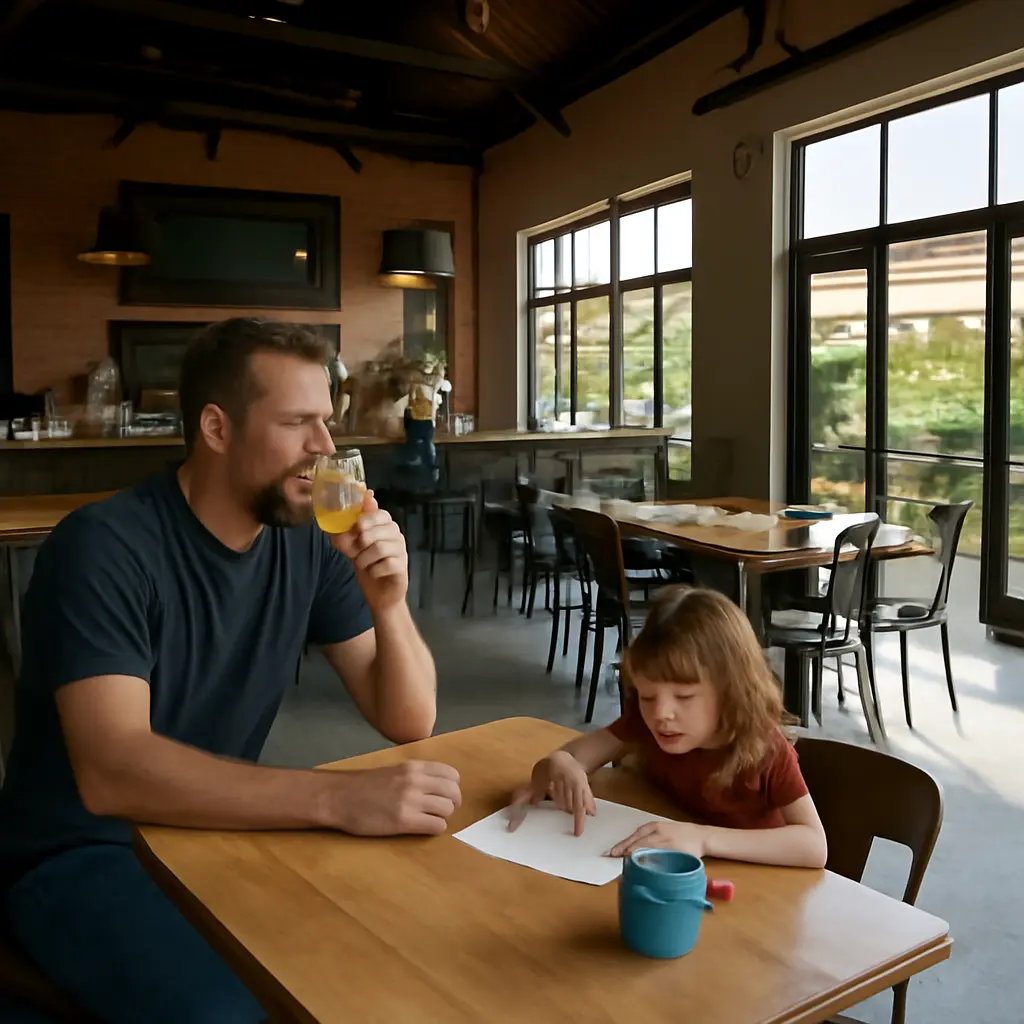
Craft breweries are increasingly exploring a family-first experience: a welcoming, safety-conscious taproom where adults can enjoy beer while children and other non-drinking guests have appropriate ways to participate. It is a promising direction, not a proven industry-wide “next big trend.” The Brewers Association counted 9,906 U.S. craft breweries in 2023, while its 2024 industry data showed craft beer volume declining 4% and craft’s share of the beer market by volume at 24.7%. Those pressures make experiences that encourage visits and repeat business worth testing. Success depends on clear operating boundaries, local law, guest safety, and a genuine offer for families—not simply putting a play area beside a bar.
Craft brewery family-first experiences: definition and business case
A family-first brewery experience is a hospitality model designed to accommodate adults with children and mixed-age groups without treating the brewery as a childcare venue. It combines adult-oriented service, such as beer tasting and food, with suitable seating, accessible facilities, nonalcoholic choices, and activities or spaces that fit the venue’s legal and physical limits.
There is no single industry-standard definition of “family-friendly brewery.” The Brewers Association’s brewery and taproom resources address business operations, while the Family-Friendly Beer Garden framework developed by the beer garden consultancy Little B Beer offers a practical model for welcoming caregivers and children. These are guidance frameworks, not proof that every brewery can or should admit minors. Licensing, zoning, fire codes, insurance, and local rules can differ substantially.
The business rationale is experiential differentiation: a brewery may become a gathering place for a wider group than beer enthusiasts alone. That matters in a competitive market, but family programming is not automatically profitable. Operators should measure visitation, food and nonalcoholic sales, repeat visits, labor costs, complaints, and safety incidents before expanding the idea.
Taproom hospitality for mixed-age groups
A family-ready taproom is a regulated hospitality space that makes room for caregivers and children while preserving the brewery’s core adult service. Useful features can include high chairs, stroller-accessible routes, family-sized tables, changing facilities, clear sightlines, and a quieter seating area. The model works best when the venue’s layout and service rules are explicit rather than improvised during busy periods.
The National Restaurant Association’s 2024 State of the Restaurant Industry described off-premises dining as a significant part of restaurant demand, reflecting customers’ interest in convenience and flexible occasions. That finding does not establish demand for family brewery visits specifically, but it supports a broader hospitality lesson: guests value experiences that fit real-life schedules and group needs. Breweries should verify local demand through reservation patterns, customer surveys, and sales data rather than assume that family access alone will bring new business.
Family-first does not mean childcare
A family-first venue accommodates families; it does not transfer supervision responsibility from caregivers to brewery staff. The distinction is essential. A play corner, lawn, or activity table should not be advertised as supervised childcare unless the business is legally authorized and properly staffed to provide that service. Breweries should state that adults remain responsible for children and set expectations about running, equipment, stairs, production areas, and access to service counters.
The Centers for Disease Control and Prevention’s 2023 Youth Risk Behavior Survey found that 22% of U.S. high-school students reported current alcohol use, defined as drinking on at least one day in the previous 30 days. The survey concerns adolescents, not brewery visitors, but it reinforces the importance of preventing underage access and modeling responsible alcohol service. Staff training, age checks, controlled service, and clear supervision rules should remain central to any family-oriented format.
Family-first brewery design: spaces, activities, and safeguards
The strongest family-first experiences begin with design and operations, not decoration. A brewery must decide which areas are open to minors, how guests move through the site, what activities are appropriate, and how staff respond when rules are not followed. Those decisions connect the welcome offered to families with the safety and compliance obligations of serving alcohol.
Separate production from guest areas
A production brewery contains hazards that are not suited to casual visitor access, including hot liquids, pressurized equipment, chemicals, forklifts, wet floors, and active loading zones. The Occupational Safety and Health Administration requires employers to address workplace hazards; its general industry standards include requirements concerning walking-working surfaces and powered industrial trucks. These rules are primarily workplace protections, but they underscore why guest routes should be physically separated from operations.
Practical controls include locked or staff-controlled production doors, barriers around equipment, marked guest pathways, slip-resistant flooring, visible exit routes, and staff procedures for emergencies. Breweries offering tours should use controlled routes, age and group rules, and trained guides. A child-friendly label should never imply that production areas are safe playgrounds.
Create activities that suit the venue
Family-appropriate programming can include board games, coloring sheets, seasonal craft sessions, outdoor lawn games, food events, or community markets. These activities are distinct from alcohol service and should be planned to avoid obstructing exits, serving lines, or accessible routes. Age ranges, event capacity, weather plans, and cleanup responsibilities should be established in advance.
An illustrative example is a brewery that schedules a weekend food-truck afternoon with a clearly designated family seating zone, nonalcoholic drinks, and simple table activities, while keeping the bar and production floor under normal access controls. This is a planning example, not a claim about a measured industry-wide result. Operators should test one event at a time and compare attendance, per-guest sales, staffing needs, and guest feedback with ordinary service periods.
Offer meaningful nonalcoholic choices
Nonalcoholic options make a venue more inclusive for designated drivers, pregnant guests, people who do not drink, and children. Choices may include water, soft drinks, coffee, alcohol-free beer, and substantial food. The Brewers Association has reported growth in the nonalcoholic beer category in recent years, although category growth does not guarantee local demand at any particular taproom.
For operators, the opportunity is to treat nonalcoholic drinks as a deliberate part of the menu rather than an afterthought. Clear labeling, separate handling where needed, and staff familiarity with alcohol content help guests make informed choices. A balanced menu also reduces pressure to make alcohol the only reason a mixed-age group visits.
Family-friendly brewery operations: law, service, and measurement
A welcoming atmosphere is sustainable only when it fits the law and the brewery’s capacity. Rules on minors in alcohol-licensed premises vary by state, license type, venue layout, and local authority. Consequently, a brewery should obtain guidance from its state alcohol-control agency, local officials, insurer, and qualified legal counsel before changing admission rules or adding children’s events.
Set clear alcohol-service and admission policies
A written policy should explain whether minors are allowed, where they may go, what hours or events have restrictions, and who is responsible for supervision. It should also cover identification checks, refusal of service, intoxication, outside alcohol, and procedures for incidents. Staff should receive regular training and know how to apply the rules consistently.
The National Institute on Alcohol Abuse and Alcoholism describes binge drinking as a pattern that brings blood alcohol concentration to 0.08% or higher; for a typical adult, that corresponds to about five drinks for men or four for women in roughly two hours. This public-health measure is not a taproom service rule, but it highlights why responsible-service practices matter in any alcohol-serving venue. Breweries should follow applicable state and local service laws and avoid promotions that encourage rapid or excessive consumption.
Measure whether the model works
A family-first strategy should be evaluated as an operating hypothesis. Useful measures include total visits, repeat visitation, food and nonalcoholic sales, average transaction value, event attendance, labor hours, customer feedback, accessibility complaints, and safety incidents. Comparing similar weekdays or seasons can help distinguish the effect of family programming from weather, tourism, or other promotions.
Operators can begin with a limited pilot: one family-oriented event or a defined weekend period, clear capacity limits, and a short post-visit survey. If the program attracts new groups but creates congestion or unmanageable staffing demands, the design needs revision. If it improves guest satisfaction and repeat business without compromising safety or service, the brewery can consider expanding it.
The outlook for family-first brewery experiences
Family-first hospitality is best understood as a possible niche and differentiation strategy—not a universal replacement for traditional taprooms. The market context is compelling enough to justify careful experimentation: craft breweries face competitive pressure, and many guests seek social experiences that accommodate varied preferences. But the available national industry statistics do not establish that family-oriented venues will outperform other brewery models.
The practical path is to define the experience precisely, separate guests from production hazards, provide useful nonalcoholic choices, train staff in responsible service, and confirm local legal requirements. Brewery owners can start with a small, measurable pilot and invite feedback from caregivers, employees, and other customers. A family-friendly brewery succeeds when it makes mixed-age visits comfortable without blurring the boundary between hospitality, alcohol service, and parental supervision.
Sources: Brewers Association, National Beer Sales & Production Data, 2023, https://www.brewersassociation.org/statistics-and-data/national-beer-stats/; Brewers Association, 2024 U.S. Craft Brewing Industry Figures, https://www.brewersassociation.org/press-releases/brewers-association-releases-annual-craft-brewing-industry-production-report/; Brewers Association, Brewery Operations and Taproom Resources, https://www.brewersassociation.org/; Little B Beer, Family-Friendly Beer Garden Framework, https://littlebbeer.com/; National Restaurant Association, 2024 State of the Restaurant Industry, https://restaurant.org/research-and-media/research/research-reports/state-of-the-restaurant-industry/; Centers for Disease Control and Prevention, Youth Risk Behavior Survey Data Summary & Trends Report: 2013–2023, https://www.cdc.gov/yrbs/dstr/index.html; Occupational Safety and Health Administration, 29 CFR Part 1910—Occupational Safety and Health Standards, https://www.osha.gov/laws-regs/regulations/standardnumber/1910; National Institute on Alcohol Abuse and Alcoholism, Understanding the Dangers of Alcohol Overdose, https://www.niaaa.nih.gov/publications/brochures-and-fact-sheets/understanding-dangers-of-alcohol-overdose.