
The Rise of Family Dining Culture at Casual Brewery Establishments
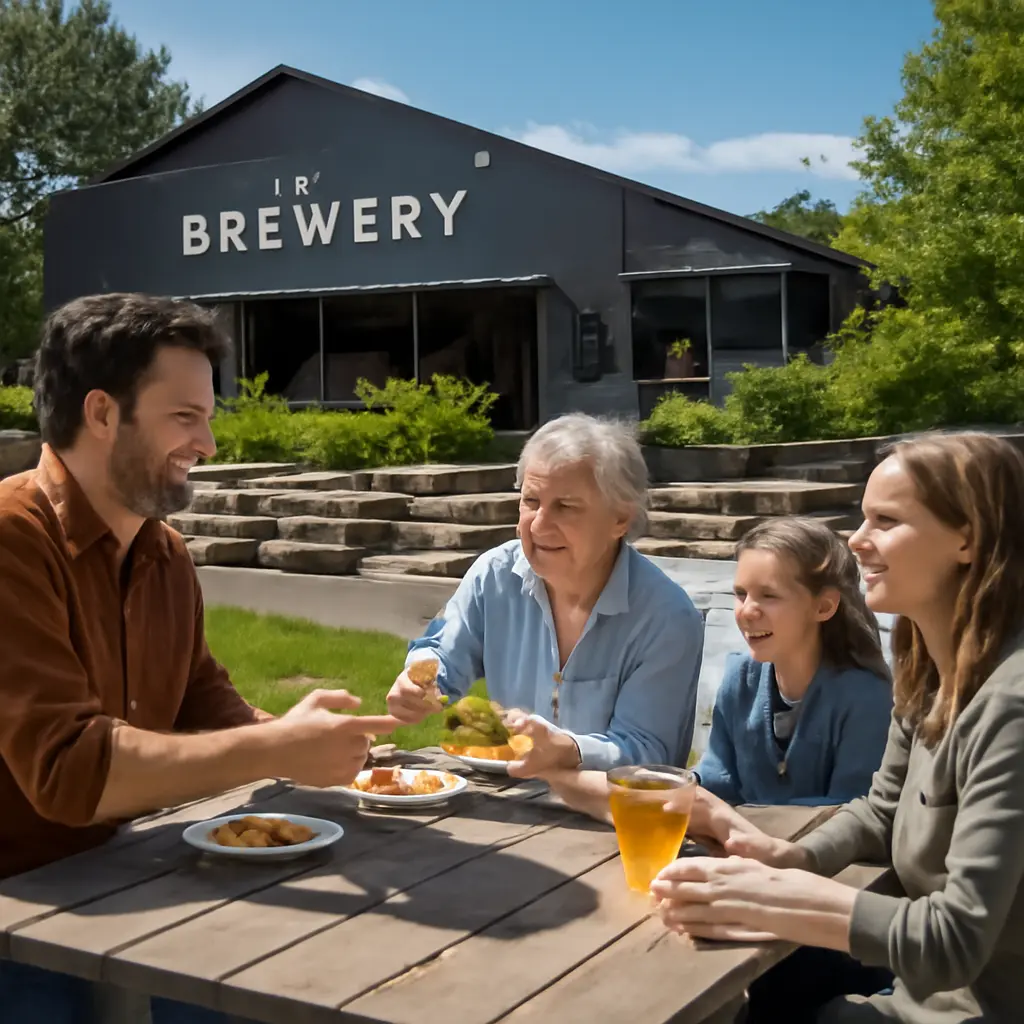
Casual brewery establishments are brewpubs and brewery taprooms that pair house-made beer with informal dining and a welcoming, community-oriented atmosphere. Family dining has become an important part of this model: breweries increasingly accommodate children and multigenerational groups through food menus, daytime hours, outdoor seating, and alcohol-free options, while retaining beer as a central part of the experience. The shift matters because restaurants and bars operate in a large, changing market: the National Restaurant Association projected U.S. restaurant and foodservice sales of $1.5 trillion in 2025, while brewery taprooms face pressure to broaden their appeal and build repeat local business. The sections below define the family-friendly brewery model, explain its service and design features, and examine the opportunities and responsibilities behind its growth.
Family Dining Defines the Casual Brewery Experience
“Family dining” in this context means a meal occasion designed to welcome adults and children together, rather than a formal restaurant category with a single standardized definition. The Brewers Association distinguishes brewery businesses by operating model: a brewpub combines brewing and food service, while a taproom brewery focuses on selling beer at the brewery and may or may not offer a full kitchen. Family-friendly service is therefore an attribute that can apply to either model, subject to local licensing rules and the operator’s policies.
The appeal is not simply that children are permitted. A family-oriented brewery typically makes the visit practical through approachable meals, varied seating, clear expectations about alcohol service, and activities or amenities that do not depend on drinking. This positioning can connect brewery hospitality to neighborhood dining, tourism, and community gathering. It is not universal: some taprooms remain adult-focused, and individual establishments set their own age, supervision, and service policies.
Brewpubs and Taprooms Serve Different Dining Roles
A brewpub brews beer on-site and operates as a restaurant, often making food a core component of the business. A taproom brewery primarily serves beer produced by the brewery; food may come from a limited kitchen, rotating food trucks, pop-ups, or outside vendors. The distinction helps explain why family dining varies: a brewpub can control menu breadth and meal timing, while a taproom may depend on vendor schedules and the availability of child-friendly dishes.
The Brewers Association’s annual industry reporting tracks U.S. craft breweries and their operating categories, providing context for a sector that includes brewpubs, taprooms, and production-focused breweries. These categories are useful for understanding business models, but they do not by themselves measure how many breweries welcome families. Operators and researchers should avoid treating “family-friendly” as a formal industry-wide classification unless a study defines it explicitly.
Family Hospitality Extends Beyond Alcohol Service
Family hospitality is a service approach that lets different age groups share an outing while keeping alcohol consumption bounded by responsible policies. In practice, this can include nonalcoholic drinks, water access, food choices for younger diners, high chairs where feasible, and staff trained to follow age-verification and intoxication-prevention requirements. The Centers for Disease Control and Prevention identifies excessive alcohol use as a significant public-health concern, reinforcing why a family-oriented atmosphere should never be confused with relaxed alcohol controls.
Clear house rules also help prevent misunderstandings. Signage and staff communication can explain supervision expectations, restricted areas, closing-time policies, and whether children are permitted in outdoor spaces. A welcoming environment and responsible service are complementary: the former broadens the occasions the business can serve, while the latter protects guests, workers, and the community.
Food, Space, and Scheduling Support Family Dining
Once a brewery chooses to serve families, the experience depends on operational details as much as branding. Menu design, seating, noise levels, service speed, and opening hours determine whether a visit works for a quick meal, a weekend gathering, or a community event. These features also link family dining to the broader restaurant economy, where operators must balance guest expectations with labor, food, and occupancy costs.
Menus Balance Brewery Identity With Familiar Choices
A family-oriented brewery menu combines food that complements beer with dishes that are easy to share and appealing across age groups. Common approaches include burgers, pizza, sandwiches, salads, and small plates, alongside simpler portions or customizable sides for children. These are examples, not a universal formula; dietary needs, local tastes, kitchen capacity, and the brewery’s identity should shape the menu.
Food can also support longer visits and give non-drinking guests a meaningful reason to come. The National Restaurant Association’s consumer and industry research regularly examines dining preferences and restaurant operations, while its 2025 industry outlook projected $1.5 trillion in U.S. foodservice sales. That scale underscores the commercial relevance of food service, but it does not prove that family dining alone drives brewery growth. Businesses should track their own guest counts, average checks, repeat visits, and food waste before expanding a menu.
Flexible Seating and Outdoor Areas Expand Use
Flexible seating refers to layouts that can accommodate different party sizes and needs without compromising safe circulation. Breweries may use communal tables, movable chairs, quieter corners, accessible routes, and patios to serve both families and smaller groups. Outdoor space can make a brewery feel less formal, though operators must still manage weather, accessibility, supervision, noise, and any restrictions on where alcohol may be consumed.
The U.S. Access Board’s accessibility standards provide requirements for accessible features in covered facilities, including routes and seating-related provisions. Accessibility is broader than compliance: clear pathways, usable restrooms, and seating options can make visits easier for guests with disabilities, caregivers, and older relatives. A thoughtful layout therefore supports multigenerational dining while helping staff manage busy periods.
Daytime Hours and Events Create Additional Occasions
Operating hours influence whether a brewery is perceived primarily as a nightlife venue or as a place for lunch, early dinner, and weekend outings. Earlier service can make visits more convenient for families, while events such as food-truck days, seasonal markets, trivia, or live music can attract varied audiences. Event planning should account for crowd capacity, noise, parking, alcohol service, and the suitability of activities for children.
This model also reflects a wider shift toward experience-based hospitality: guests visit not only for a product but for a setting and shared occasion. However, an event calendar should not substitute for consistent food quality and service. Tracking attendance by event, time of day, and guest type can help a brewery distinguish genuine repeat demand from one-time curiosity.
Family-Friendly Brewery Growth Brings Opportunity and Responsibility
Family dining can diversify a brewery’s customer occasions, but it adds responsibilities involving alcohol compliance, safety, accessibility, and neighborhood relations. The strongest approaches treat family inclusion as an operating standard rather than a promotional slogan. They make policies visible, train staff, and review whether the venue works for guests who are not drinking as well as for beer enthusiasts.
Responsible Service and Child Safety Must Remain Central
Responsible service means complying with licensing rules, verifying age when required, refusing service when appropriate, and preventing alcohol from being served to minors. Family-friendly design does not alter those obligations. The National Institute on Alcohol Abuse and Alcoholism describes alcohol-related risks across health and social settings, while state and local alcohol-control agencies establish rules that vary by jurisdiction. Each brewery should consult its licensing authority and document staff training and service procedures.
Child safety also depends on practical controls: keeping children away from brewing equipment and other restricted work areas, maintaining clear walkways, and communicating supervision expectations. Operators should consider how events, patios, and high-traffic service zones affect risk. Consistent procedures protect guests and reduce the chance that an otherwise welcoming environment becomes difficult to manage.
Nonalcoholic Choices Make the Welcome More Inclusive
Nonalcoholic beverages allow designated drivers, pregnant guests, people avoiding alcohol, and younger diners to participate in the same meal occasion. Options can include water, soft drinks, tea, coffee, and clearly identified alcohol-free beer. Product labels and menu descriptions should be accurate, since “nonalcoholic” and “alcohol-free” can have different regulatory meanings depending on the product and applicable rules.
A balanced beverage list can broaden the brewery’s appeal without displacing its core beer offering. It also supports responsible-drinking messages by making alternatives visible and easy to order. The useful measure is not merely the number of options, but whether guests can identify them, access them at a reasonable price, and enjoy them as part of the social experience.
Local Examples Show How the Model Can Vary
Brewery approaches differ according to location and business model. A neighborhood brewpub may offer a full meal menu and family seating throughout the week; a rural taproom may rely on scheduled food trucks and outdoor space; and a destination brewery may combine dining with tours or seasonal events. These examples illustrate operating patterns rather than verified claims about any one business’s results.
A useful case-study method is to compare the brewery’s stated policies with its actual operating features: food availability, hours, access, nonalcoholic drinks, age rules, and guest feedback. The Brewers Association’s brewery directory and industry reports can help identify business types, while local licensing information and the establishment’s own published policies are needed to verify family access. This evidence-based approach avoids assuming that every taproom is suitable for every family or that family access guarantees commercial success.
Conclusion: Family Dining Broadens the Brewery’s Community Role
Family dining at casual breweries is best understood as a combination of hospitality, food service, and responsible alcohol operations. Brewpubs and taprooms can serve multigenerational groups through appropriate menus, flexible layouts, convenient hours, and inclusive nonalcoholic options. Their success depends on clear policies, accessible spaces, safe service, and a genuine offer for guests who are not drinking—not simply on marketing themselves as family-friendly.
For brewery operators, the practical next step is to review guest feedback, licensing obligations, menu performance, accessibility, and safety procedures before investing in new amenities or events. For diners, checking a venue’s current food service, age policy, and accessibility details can make a visit more predictable. Further reading from the Brewers Association, the National Restaurant Association, and local alcohol-control authorities can help businesses and communities evaluate how brewery dining fits their needs.
Sources: Brewers Association, Craft Beer Industry Market Segments and Annual Industry Reports, https://www.brewersassociation.org/statistics-and-data/; National Restaurant Association, 2025 State of the Restaurant Industry, https://restaurant.org/research-and-media/research/research-reports/state-of-the-restaurant-industry/; Centers for Disease Control and Prevention, Alcohol and Public Health, https://www.cdc.gov/alcohol/; U.S. Access Board, ADA Accessibility Standards, https://www.access-board.gov/ada/; National Institute on Alcohol Abuse and Alcoholism, Alcohol’s Effects on Health, https://www.niaaa.nih.gov/alcohols-effects-health.